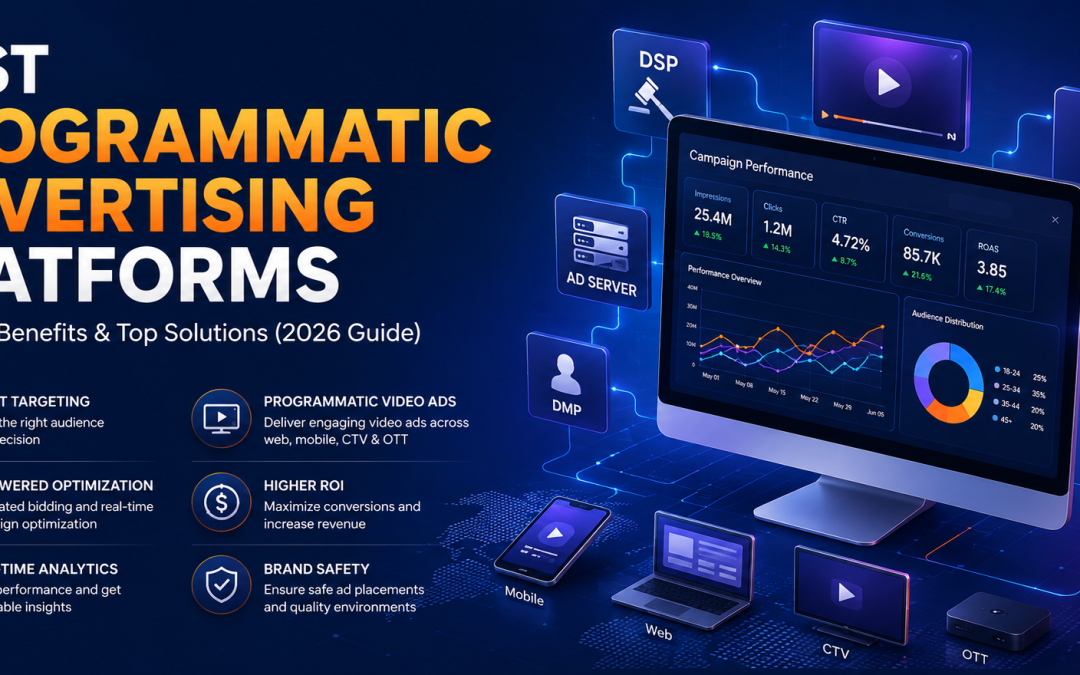
Ad-serving technology uses ad servers to automate and optimize online advertising, improving efficiency and effectiveness across digital platforms. Ad servers cater to publishers, advertisers, agencies, and ad networks, helping them manage and deliver ads seamlessly across multiple platforms.
Publishers use ad servers to display ads to website visitors and app users, ensuring smooth and targeted ad delivery. Advertisers and agencies rely on ad servers to manage and track campaigns across different websites and publisher networks effectively. Ad networks and exchanges depend on ad servers to monitor, deliver, and optimize ad campaigns across a wide digital landscape.
The Ad-Serving Technology platform includes various components designed for technical and business purposes. Some are purely technical, while others are purely business.
We will discuss each element in detail below:
Ad Serving
This functionality would be the first to come to mind whenever you hear about an Ad server. Ad servers are built around an ad-serving engine. The ad server uses algorithms and complex commands to choose the best ad for each user.
Advertisers and publishers set campaign rules, including targeting, frequency, placement, prioritization, daily caps, and earning goals for ads. Ad targeting options include geo-targeting, language, keyword targeting, placement, dayparting, and share of voice or speech customization. Ad engines evaluate all targeting factors in real time and deliver relevant ads within milliseconds to maximize campaign performance. The page will load slowly if there is a delay. This frustrates viewers and leads to fewer page views.

Ad Tracking
Ad servers track key metrics like impressions and clicks, recording user interactions before and after ad delivery for analysis. All ad interaction data is stored securely in databases to support accurate performance tracking and campaign optimization insights. We prioritize privacy by collecting only essential, anonymized data for reporting, ensuring fast, secure, and accurate ad tracking processes. Its metrics help measure the performance of each advertisement effectively.

Ad Management
You can control multiple entities in your account with Ad Management. It isn’t just ads that are managed. Ads are just one type of entity. Ads are not the only entity types that the same platform can handle. Other entities include channels, zones, sites, partners, groups and websites. You can often enable, install or activate multiple modules in the account to add additional features to your ads. One or two modules may be enough for a simple setup, while a more complex organization might need all the modules and customized modules.

Ad Reporting
The Ad-serving system uses the tracking database to display data in charts, tables, and grids. Ad serving reports typically include impressions, clicks, click-through rate (CTR), conversions/revenue, events, and cost. Users can set up a schedule for receiving regular emails or send reports to external users.

Ad Formats
Ads come in different forms, with their unique differences and considerations. The first type of ad is the image banner, which can be a JPG, PNG, or animated GIF. Images and banners are used to display ads and emails. The VAST video ad format powers pre-roll ads for seamless playback. Text ads feature a brief description paired with a clickable link. HTML5 ads are a complex, animated version of the Flash/SWF format. Our ad-serving solution supports HTML ads designed with CSS, JavaScript, and HTML templates to create unique visual effects. It also works seamlessly with third-party tags to enable diverse ad formats.

Ad Billing/Accounting
The solution should also be able to handle payments and invoices. Ad servers should be able to support pricing models such as CPM, CPC and CPA. Billing and accounting requirements are different for each user group. Publishers need a system to send and create invoices for advertisers. Advertisers need to pay invoices and review ad reports. Ad networks need to know the amount to be paid to publishing partners.

API (Application Program Interface)
APIs are a popular technical component for more complex integrations. Publishers, advertisers, ad networks, and agencies use APIs to automate processes and integrate ad servers with external systems like CRM or ERP. Automating repetitive tasks with scripts helps you focus on more critical activities. You can automate tasks such as creating different versions of ads for A/B tests, bulk uploading, applying restrictions on ad serving to many ads etc.

Conclusion
Ad-Serving Technology forms the backbone of modern digital advertising, ensuring seamless delivery, management, and optimization of ad campaigns. By integrating key components like ad serving, tracking, management, reporting, diverse ad formats, billing, and APIs, these platforms empower publishers, advertisers, and networks to achieve their goals efficiently. Whether it’s delivering the right ad to the right audience, analyzing performance metrics, or automating repetitive tasks, ad servers offer a comprehensive solution to enhance advertising strategies. With these tools in place, businesses can streamline operations, maximize revenue, and deliver engaging experiences to their audiences.